Echoes of the Cosmos
A VR-first space exploration game built in Unity. You pilot a small craft through the solar system from a first-person cockpit, no fail state, no quest log, just drifting and reading.
Slow, not stressful.
Most VR games optimise for adrenaline, fast movement, fail states, crisp combat loops. I wanted the opposite. The brief I set was 'a planetarium you can drive'. The interaction loop is just: see a planet, fly toward it, an info card fades in when you're close enough, you read for a minute, you leave. Educational without being didactic, immersive without being demanding.
Built for a desk and for VR, same scene, three control schemes.
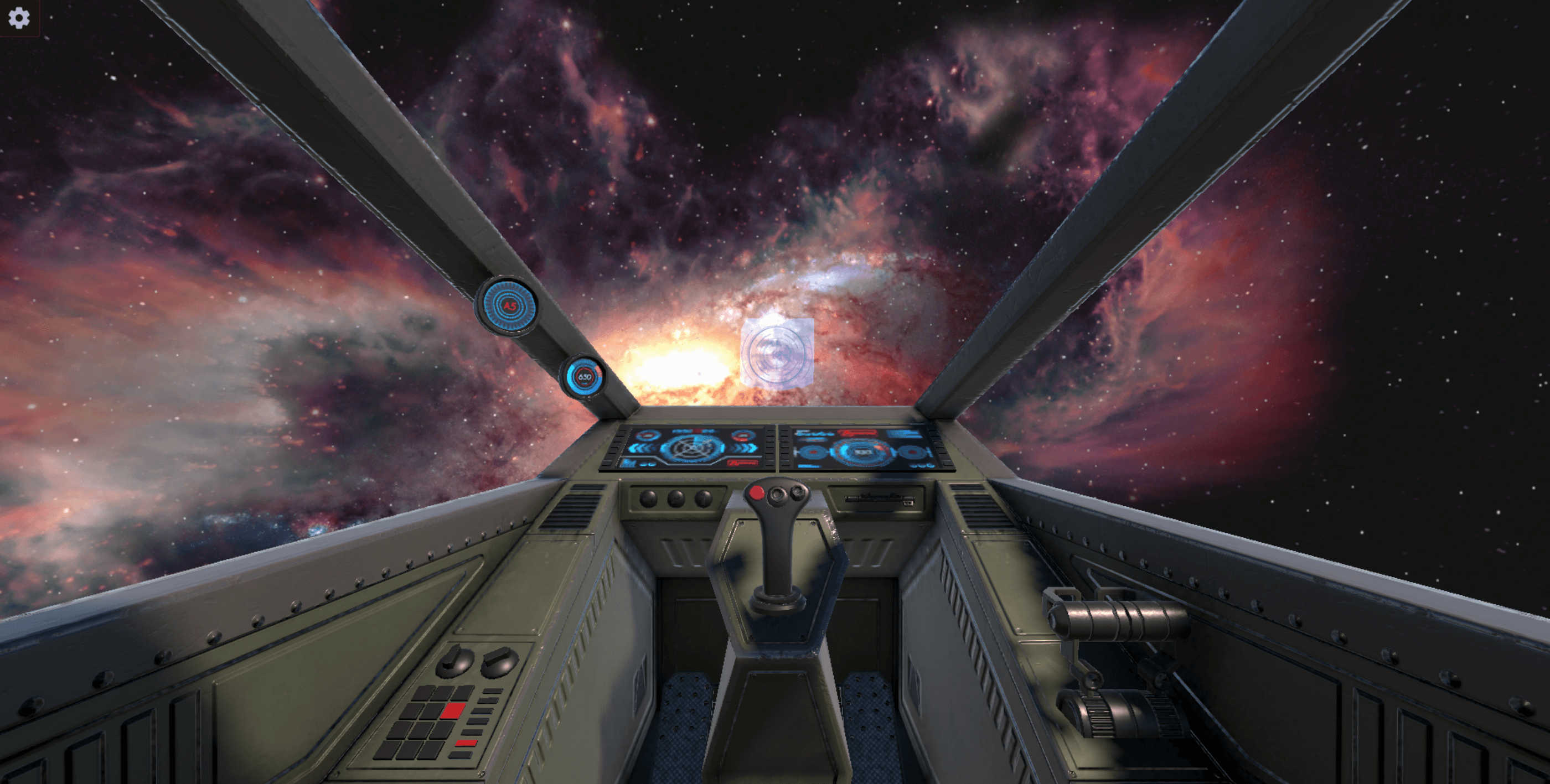
Unity's XR Interaction Toolkit gave me a clean abstraction for keyboard / mouse, gamepad, and Quest controllers, the same scene runs on all three. I tested most of the development loop on a desk because iteration speed in VR is brutal, then validated each milestone on a Meta Quest 3. The cockpit is a fixed cabin around the camera so motion sickness stays minimal: you never lose your reference frame.
Info cards as the only UI.
There's no HUD. No quest log, no minimap. Approach a planet and a card materialises in 3D space at a comfortable focal distance, name, mass, orbital period, a sentence of context. Leave and it fades. The card is the entire interface; everything else is the world. Designing those cards was harder than the engineering, too much text and you're reading documentation, too little and you've made a screensaver.
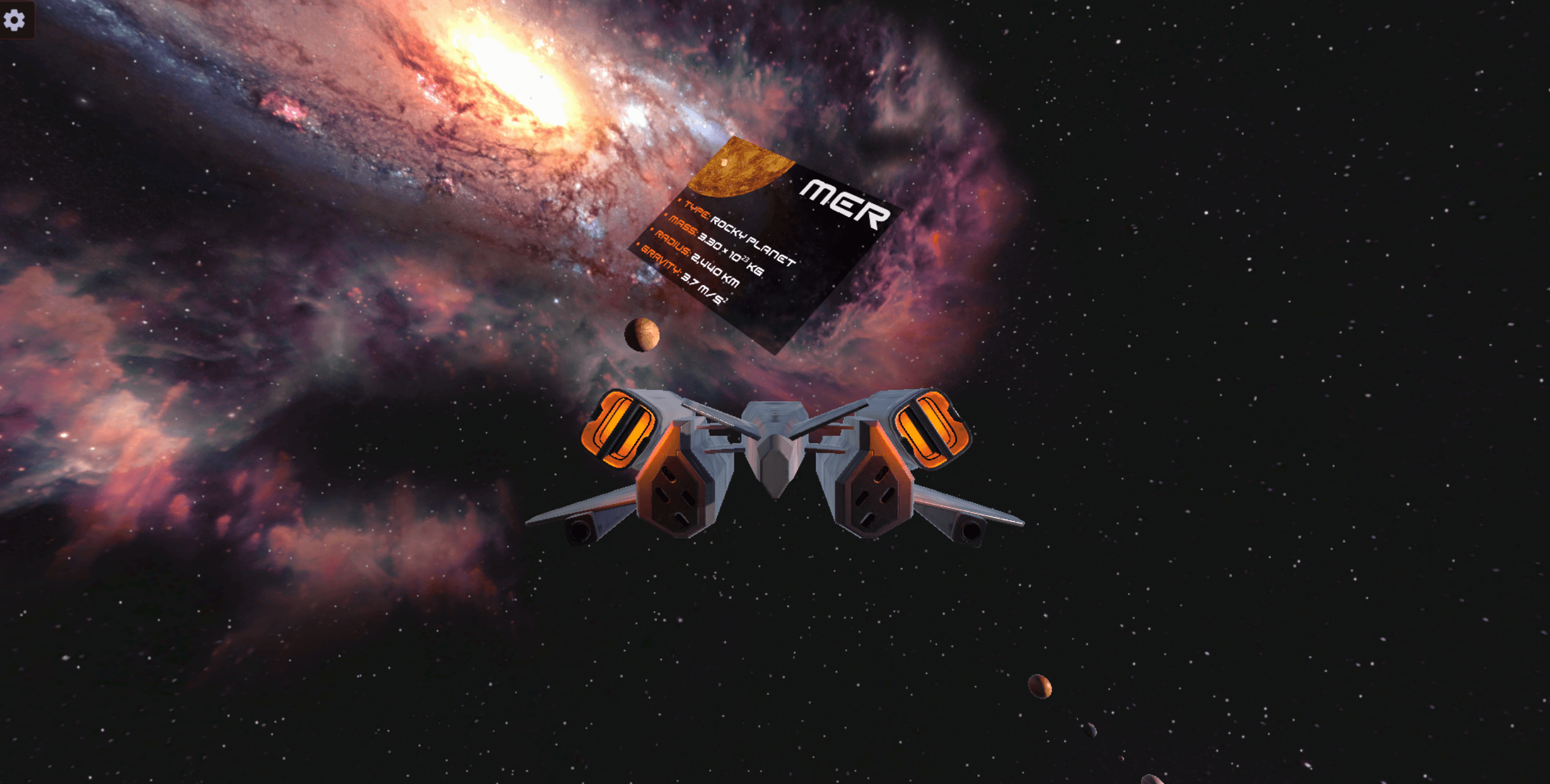
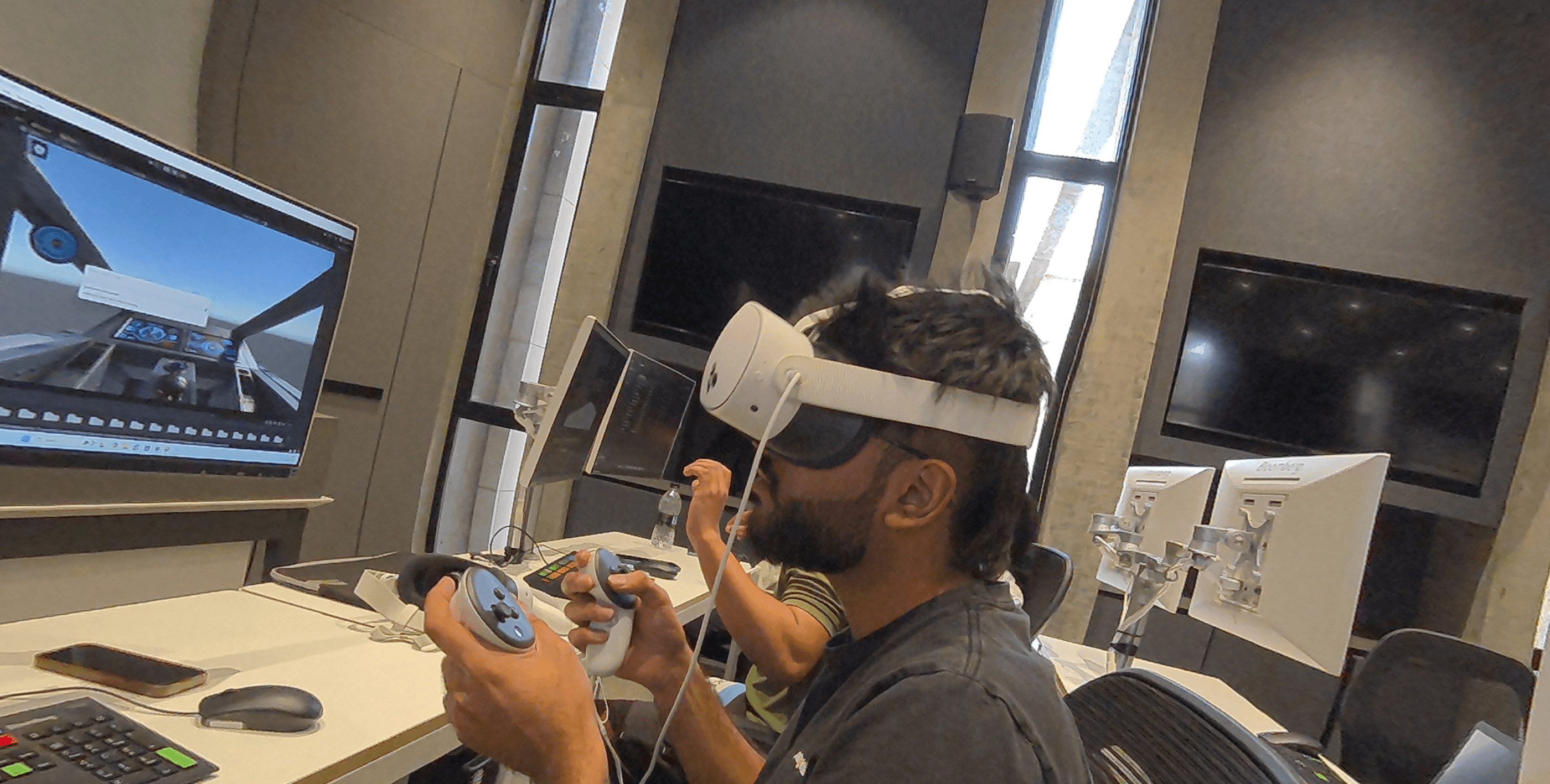
A fully functional educational VR game with the full solar system traversable, info surfaces on approach, and three input parities. Tested on Meta Quest 3 hardware.
Next pass would lean into audio, directional sound, planetary 'songs', a soundscape that changes with proximity. The visual design was cooked enough; the audio layer is the next obvious depth.