Embodied: Kinect v2 × TouchDesigner
An interface-less installation where your body is the controller and the canvas, Kinect skeletal tracking piped into four TouchDesigner pipelines.
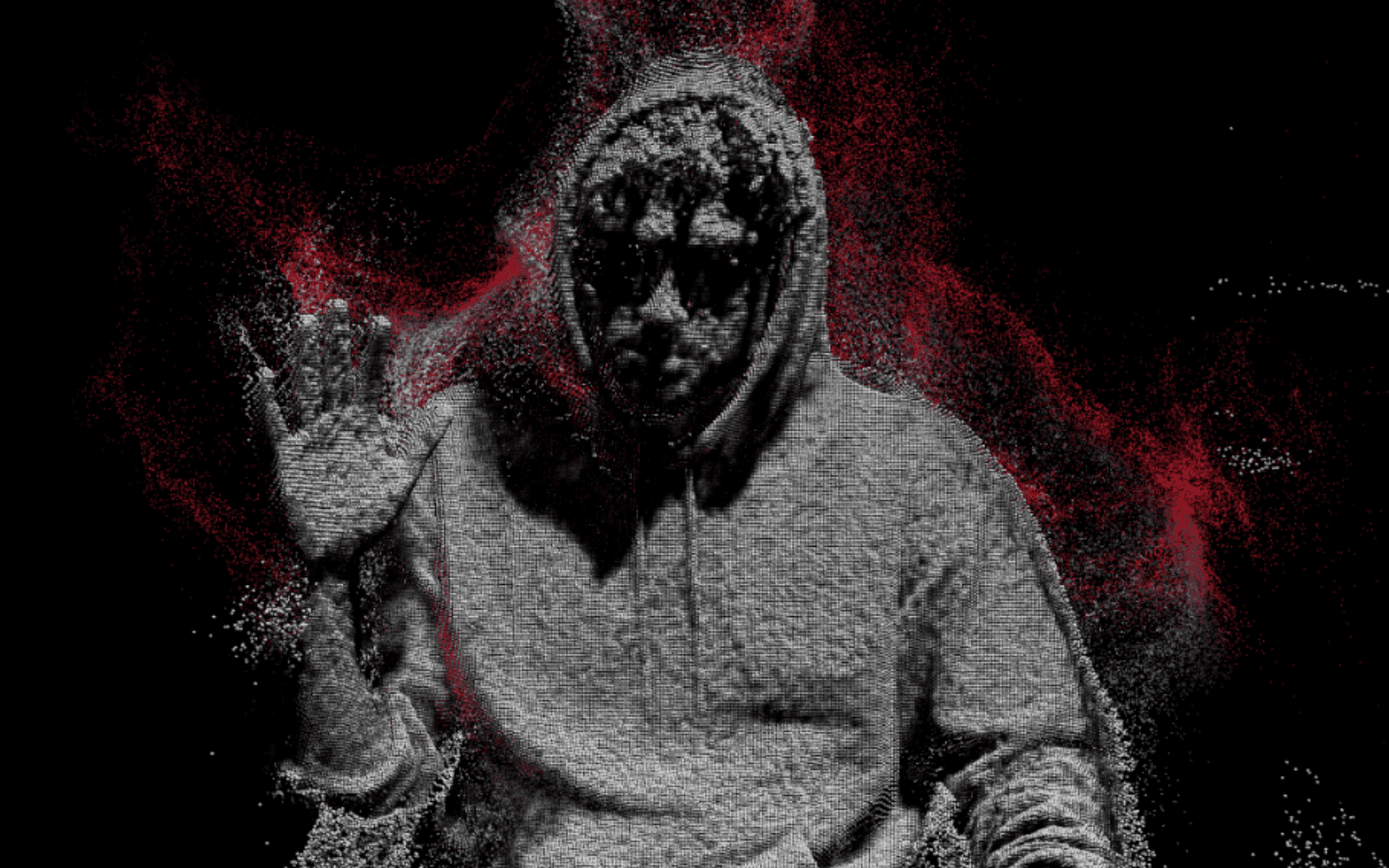
Body as the only interface.
The brief was open: explore embodied interaction in a course rooted in HCI fundamentals. I went from there to a question, what happens when there's no screen to touch, no buttons, no menus? Just a person, a room, and a sensor. The Kinect v2 captures full skeletal data at 30 frames per second; TouchDesigner gives you a node graph to do anything with it. The hard part wasn't the tech, it was deciding what mappings between movement and image were worth making.
Four ways to be seen.
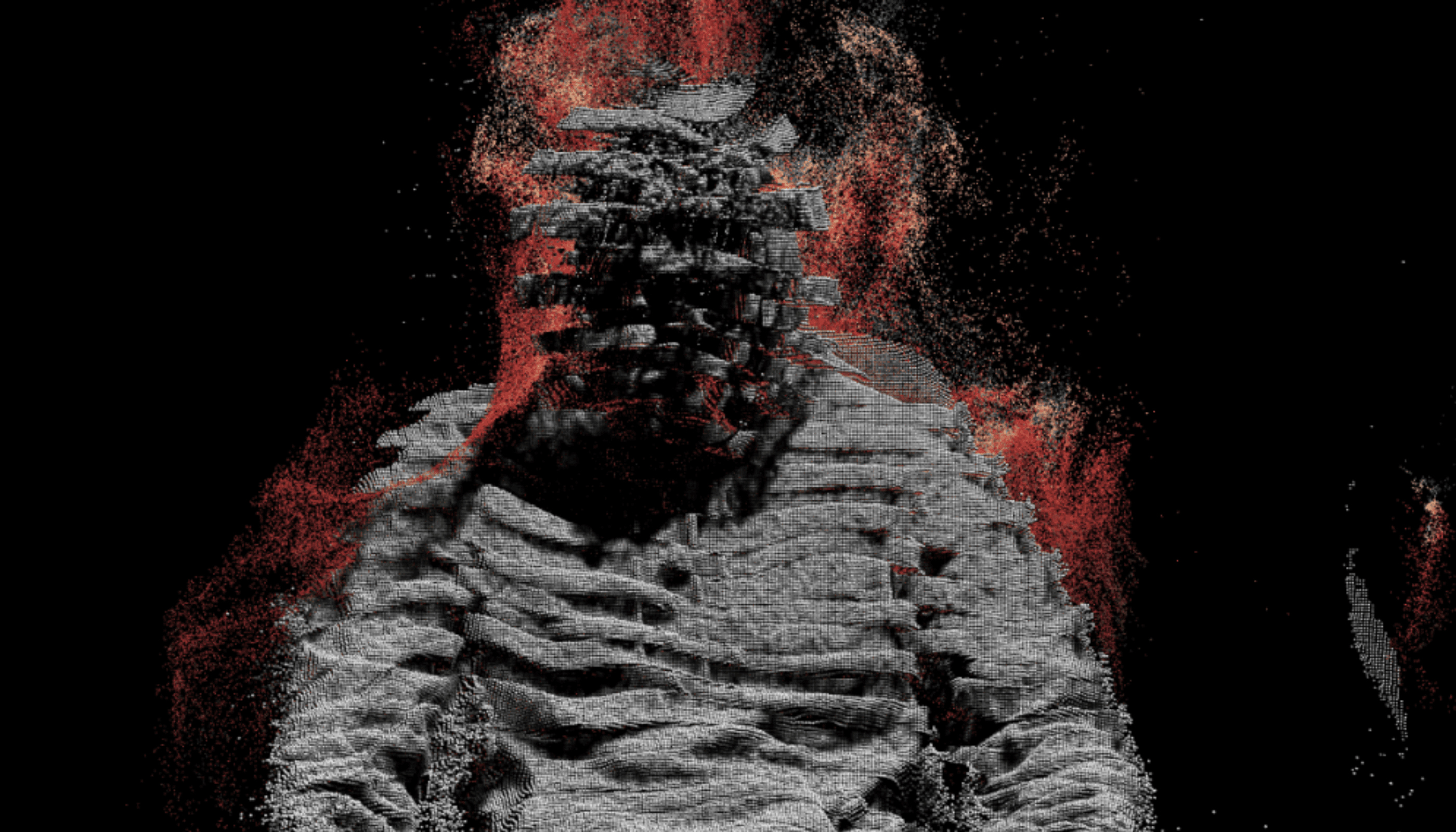
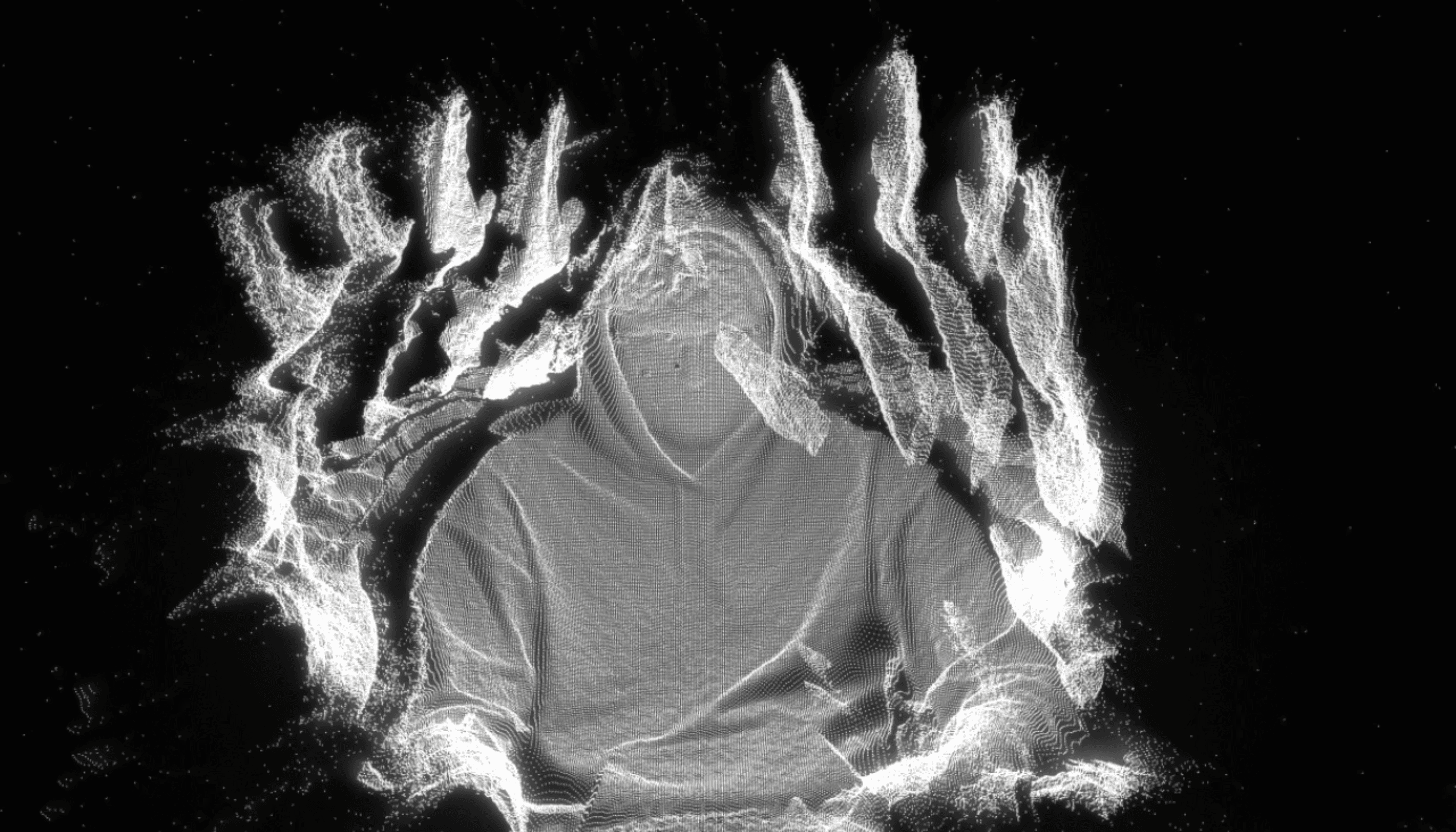
I built four distinct visualisation modes, each interrogating a different relationship between body and image. Time Slice samples your silhouette across moments and stacks them as overlapping ghosts, making your past visible. Cloudy Trail maps motion velocity into a fluid simulation, so faster gestures bloom into denser smoke. Two more modes, Generative Texture and Temporal Propagation, explore mapping joint positions into procedural patterns. The point of having four was to argue that there's no single 'right' way to translate motion into image.
Trial, error, and a lot of cabling.
I'd never used TouchDesigner before this course, so the work was front-loaded with learning. I prototyped each mode in isolation, got skeletal data flowing in, then built the visual layer on top, before composing them into a single switchable installation. A lot of the time was spent tuning thresholds: what counts as 'fast' motion, how long ghosts should persist, when noise becomes pleasant texture vs. visual chaos. The HCI literature on direct manipulation and embodied cognition shaped which compromises I made.
A working installation with four switchable modes, demonstrated live with a Kinect v2 and a projector. Documented as a course report with a system architecture, mode-by-mode algorithmic breakdown, and UX analysis.
I'd push further on the social dimension next time, what happens with two bodies in the space, not one? The current pipelines collapse multiple skeletons into a single silhouette; making them dialogue with each other would be a much richer brief.