BrandForge: Generative Brand Identity Engine
A multi-agent generative system that turns a single natural-language brief into a complete, production-ready brand kit, strategy, palette, type, logo, voice, mood board.
One prompt in, a brand kit out.
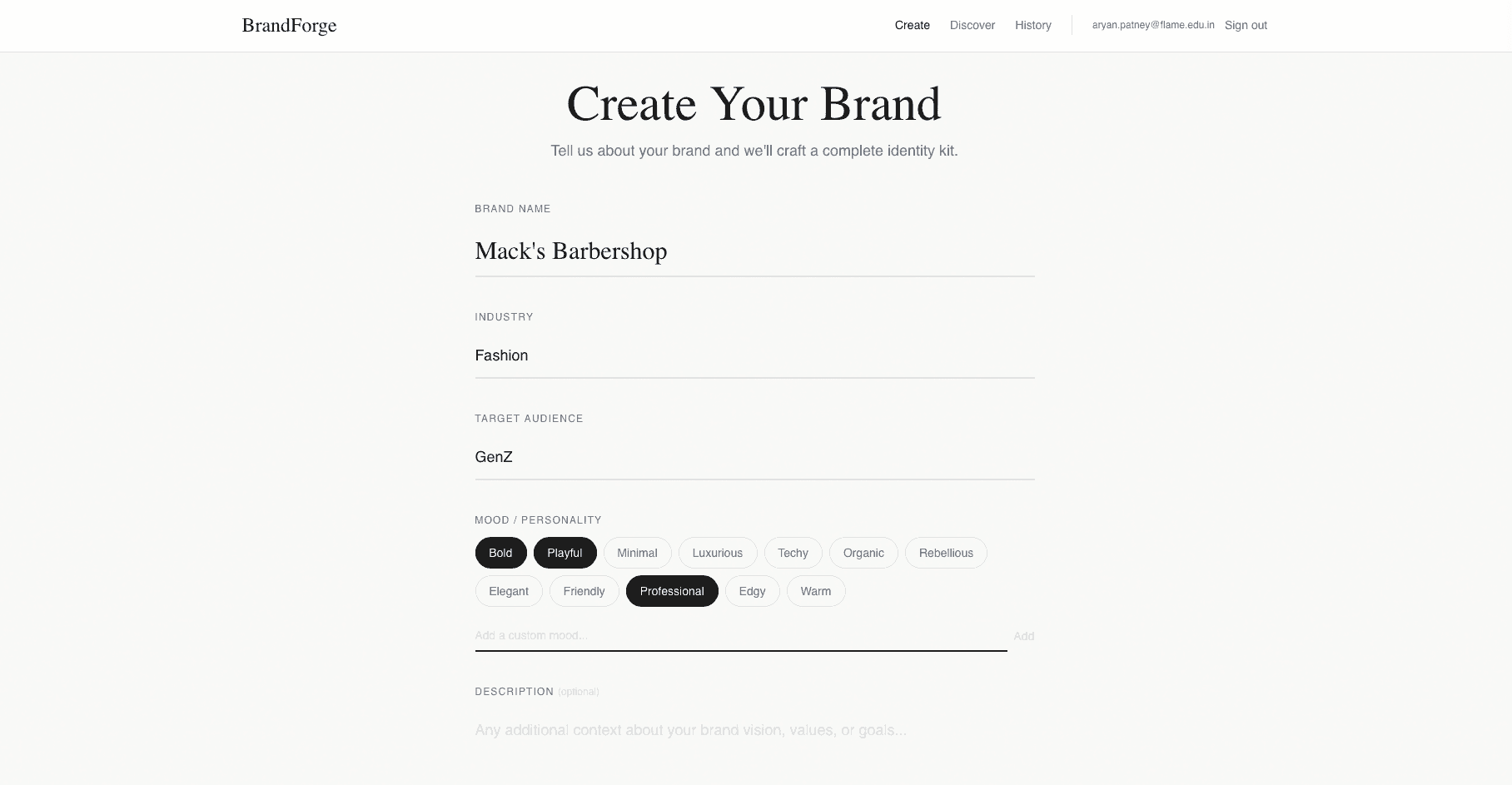
The user enters five fields, brand name, industry, target audience, mood keywords, and an optional description. That's it. From there, the system has to produce something that would normally cost a small studio a month: strategy, archetype, six-slot colour palette, typography pairing, logo directions, voice guidelines, copy scenarios, a favicon, a QR code, a mood board, social mockups, a brand story, and an FAQ. The interface promises this can happen in under a minute. The architecture has to deliver on that promise.
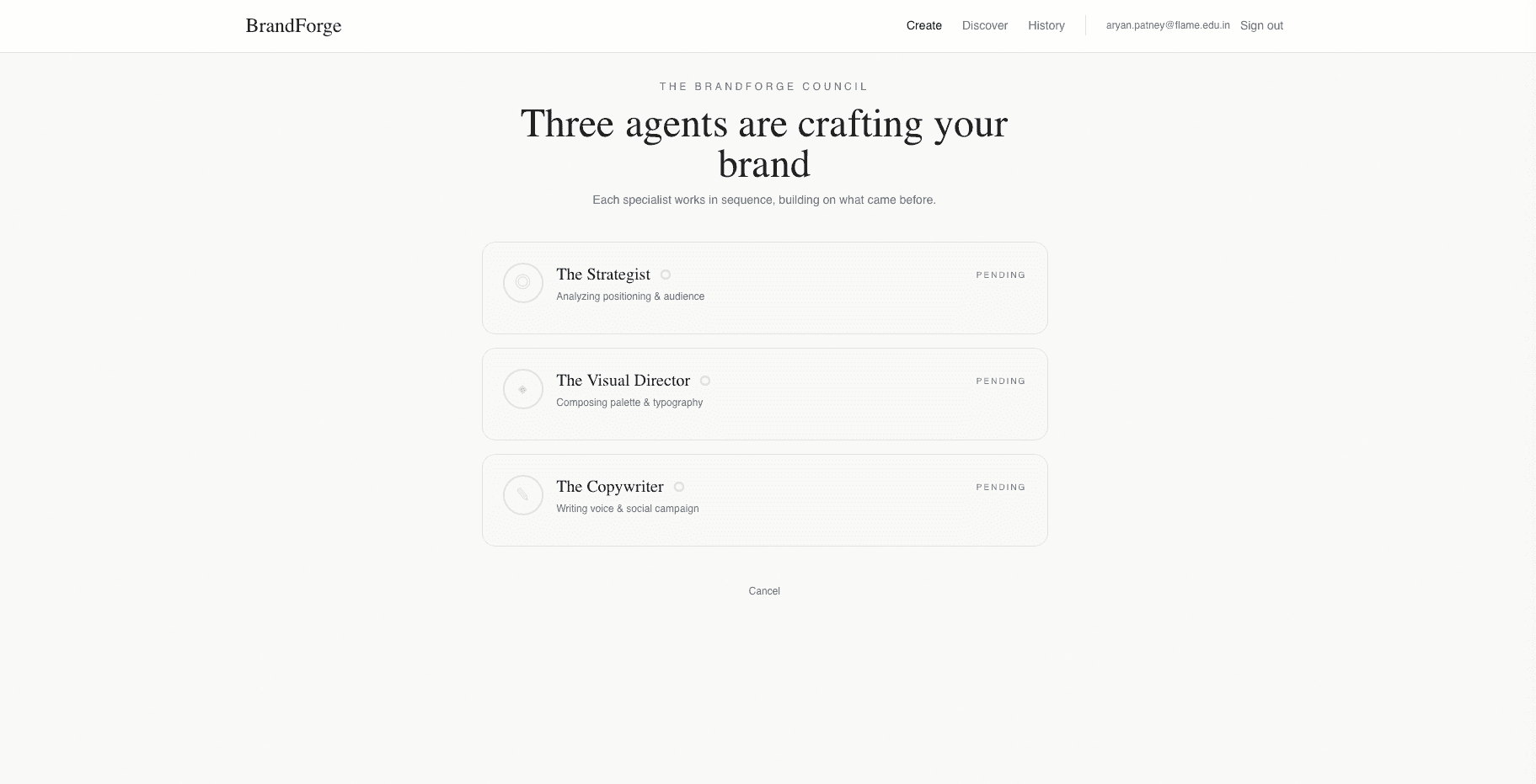
Strategist → Visual Director → Copywriter.
I deliberately chose multi-agent chain-of-prompts over RAG. The task is creative synthesis from a brief, not factual retrieval against a corpus, RAG would have been the wrong tool. Each agent does one thing well: the Strategist decides on archetype, positioning, and brand pillars; the Visual Director picks palette, type, logo direction; the Copywriter writes voice guidelines, story, FAQ. Each agent's output is strictly-typed JSON, validated on the way through, so a downstream agent can rely on what the upstream one produced.
Fallbacks, dedup, and security.
Generative systems break in interesting ways, image APIs throttle, model outputs drift off-schema, identical prompts shouldn't pay the model bill twice. BrandForge has multi-layer image fallbacks (so a failed mood-board image swaps to a deterministic alternative, not a broken state), a deterministic client-side SVG logo generator (so even if every image API fails, you still get a logo), response-cache deduplication (same brief, same kit, no second bill), and a prompt-injection filter at the input layer. Auth and storage are on Supabase with row-level security, so users only see their own kits.
Deployed to Vercel and working end-to-end. A user can land on the home page, type a brief, and watch a complete brand kit assemble in under a minute.
More iterations of the visual-output layer are coming, better logo quality, richer mood boards, exportable design tokens. The agent architecture is the part I'd keep; the rendering layer is where the next month of work goes.