Thrifty: A Home for India's Thrift Market
A concept marketplace that drags India's Instagram-led thrift economy onto a real platform, browse, buy, pay, ship in one place, for both buyers and sellers.

The Instagram thrift economy is huge, and broken.
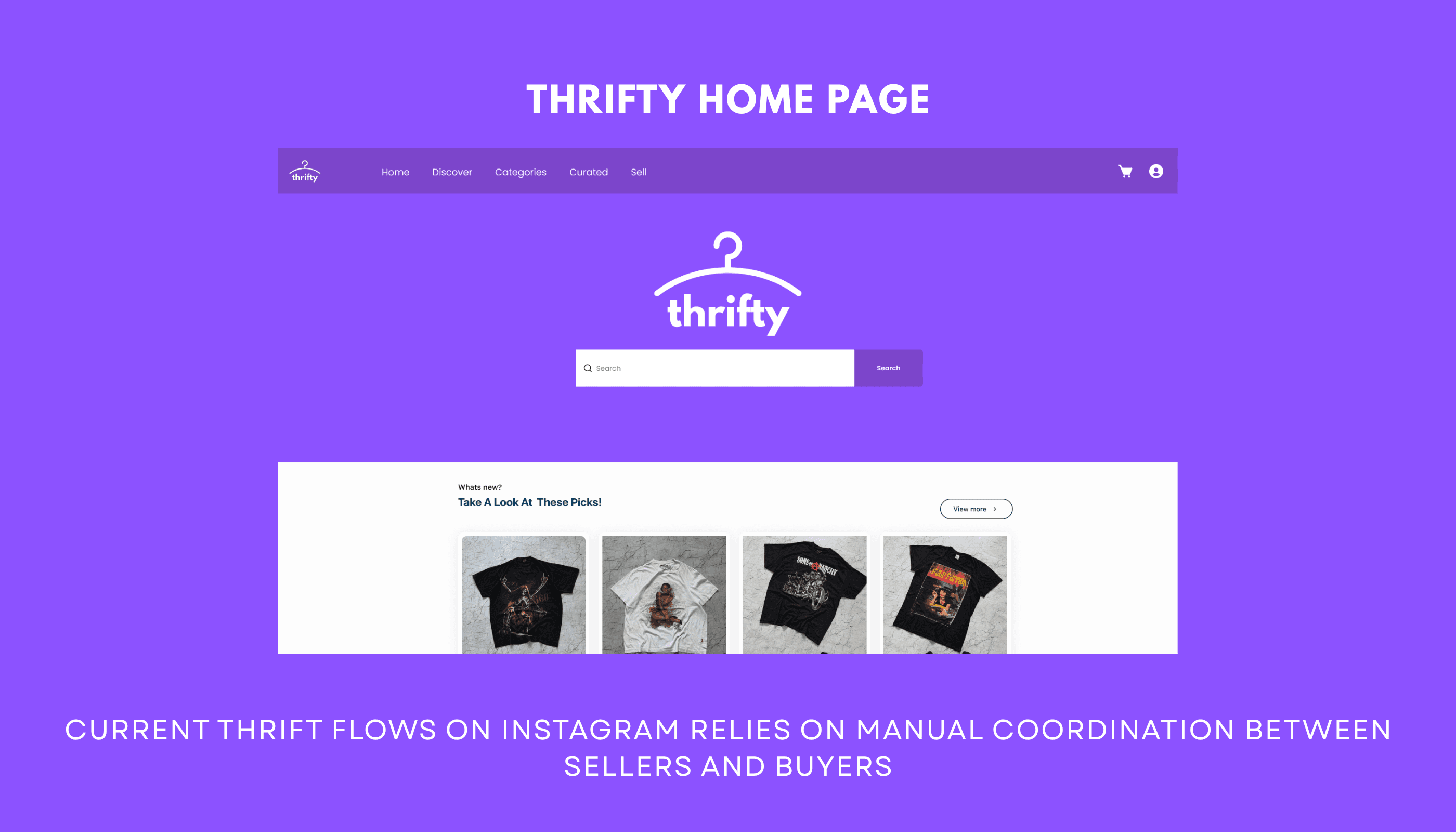
India's secondhand fashion market lives almost entirely on Instagram: sellers post drops as Stories, buyers DM 'mine' or 'price?', payment happens over UPI, shipping is negotiated case by case. It's vibrant and totally illegible. Drops sell out in minutes; disputes go nowhere; trust is built one DM at a time. Thrifty's question: can you keep the energy of that economy and give it the rails of a real marketplace?
Buyer flow and seller flow, designed in parallel.
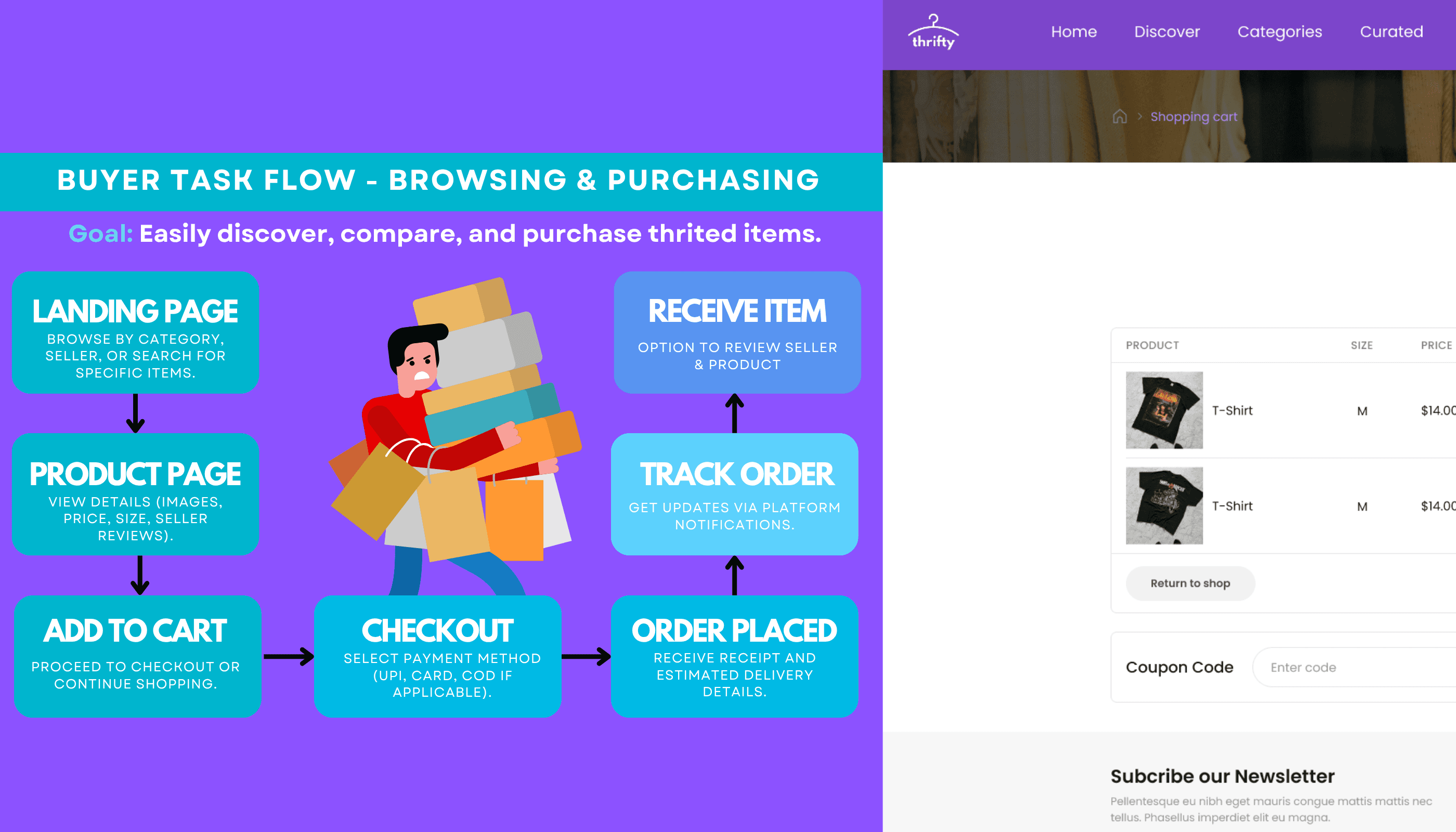
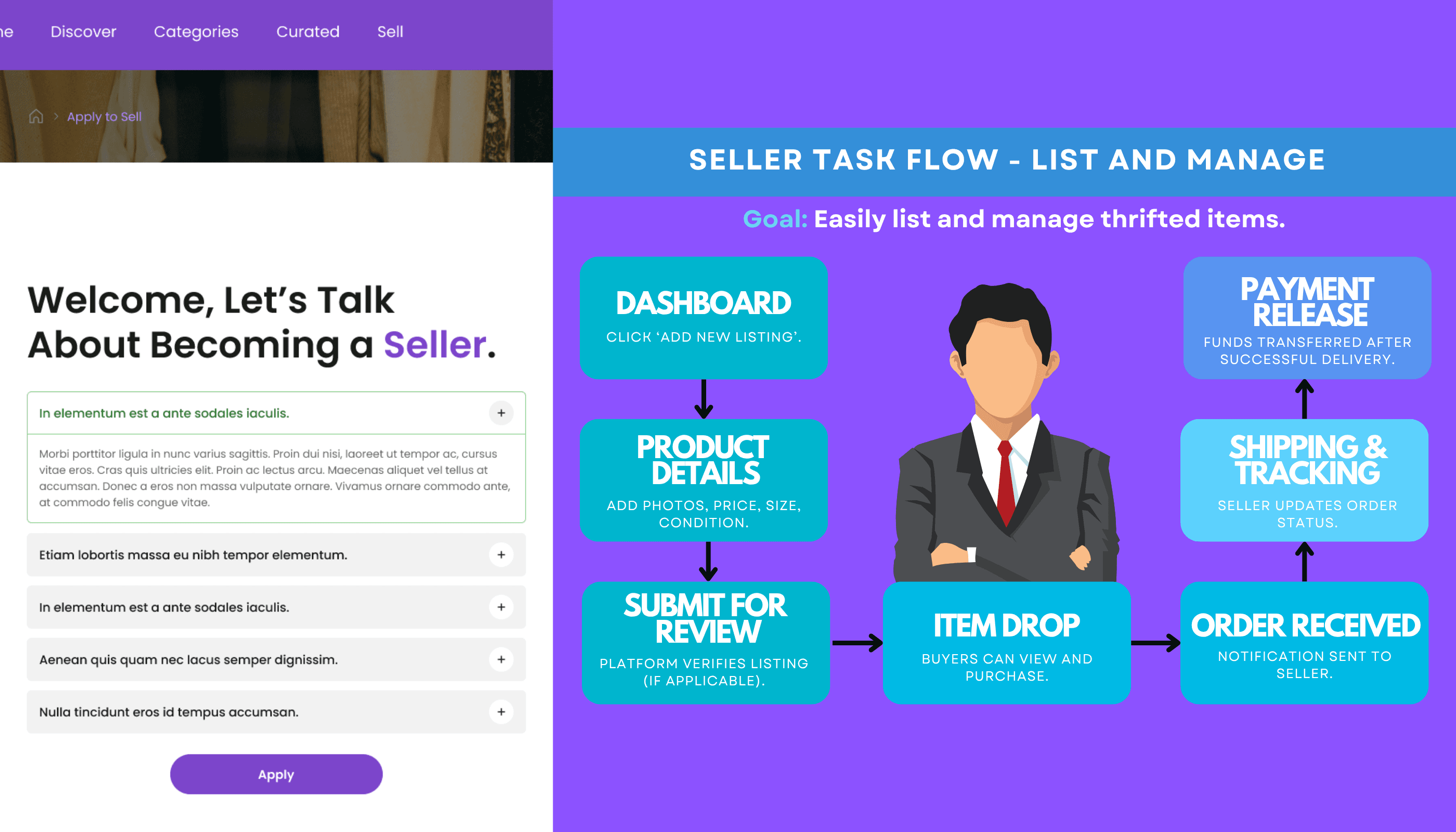
Thrifty is really two products. The buyer side is browse, save, buy, track. The seller side is inventory, drops, fulfilment. I designed both flows end-to-end, in lockstep, because choices on one side constrain the other, the seller's drop-scheduling tool is what enables the buyer's structured browse view. A platform like this only works if both sides feel like the system was designed for them, not retrofitted.
Six months with sellers and buyers.
The product wouldn't be real without the people. I spent the first stretch of the project interviewing sellers running Instagram thrift accounts and buyers who shop on them, what works, what doesn't, what they'd pay to fix. Every flow in the final design points back to a specific complaint heard in those conversations.
A complete prototype, both buyer and seller flows, end-to-end, in Figma, plus the underlying research that justifies every choice.