Stym: Sensory Stim Wearable
A 3D-printed sensory wearable system, bracelet, pendant, ring, designed for autistic children who stim. Discreet, modular, made to disappear into daily life.
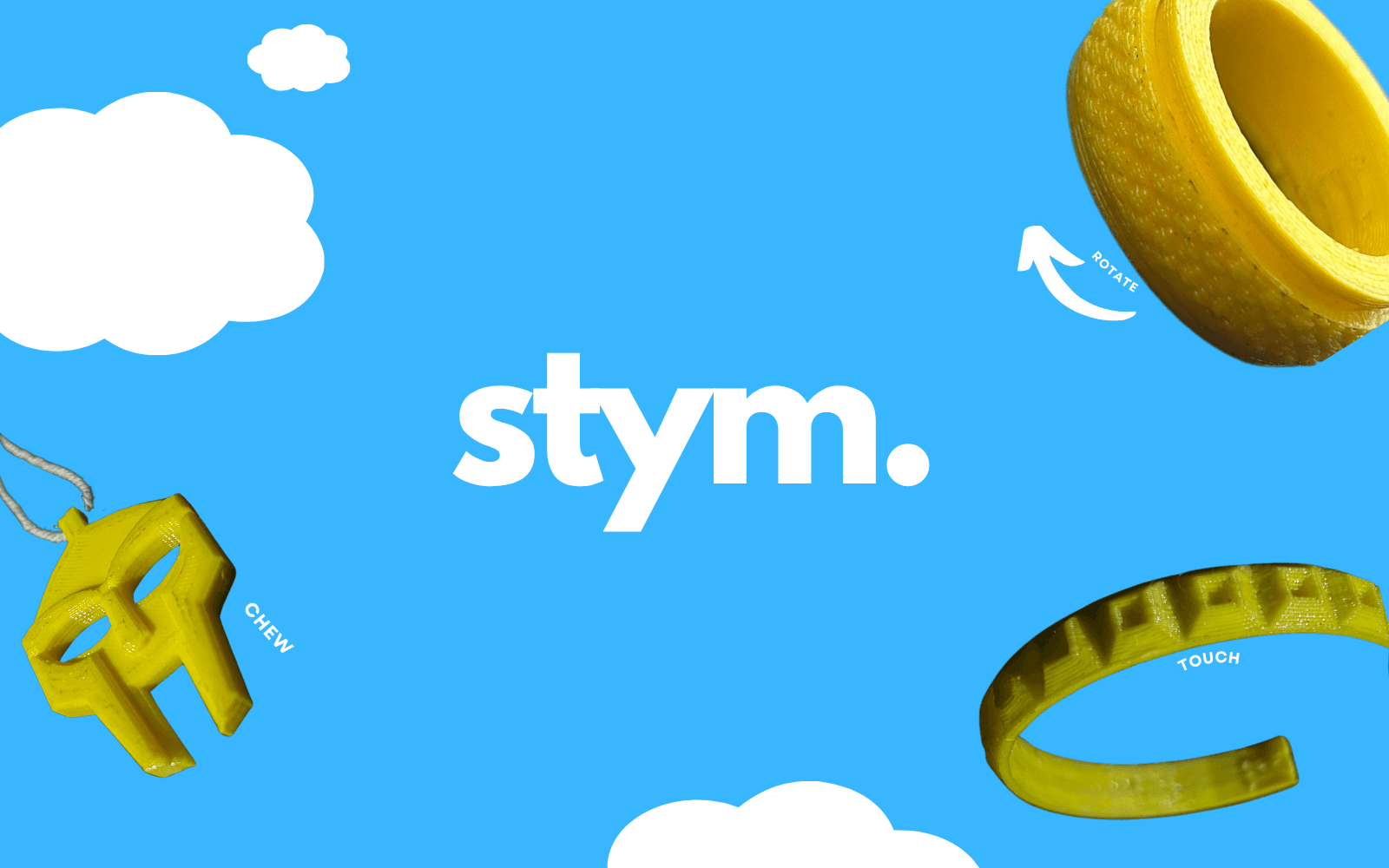
Stimming is regulation, not a problem.
Stimming, repetitive self-stimulation, often through fidgeting, rocking, or oral movement, is how many autistic people self-regulate. The problem isn't the behaviour; it's that the tools that exist for it tend to look conspicuous, infantilising, or therapeutic. Stym started from a different premise: design objects that pass for jewellery, that a kid would actually want to wear, that happen to be excellent stim toys.
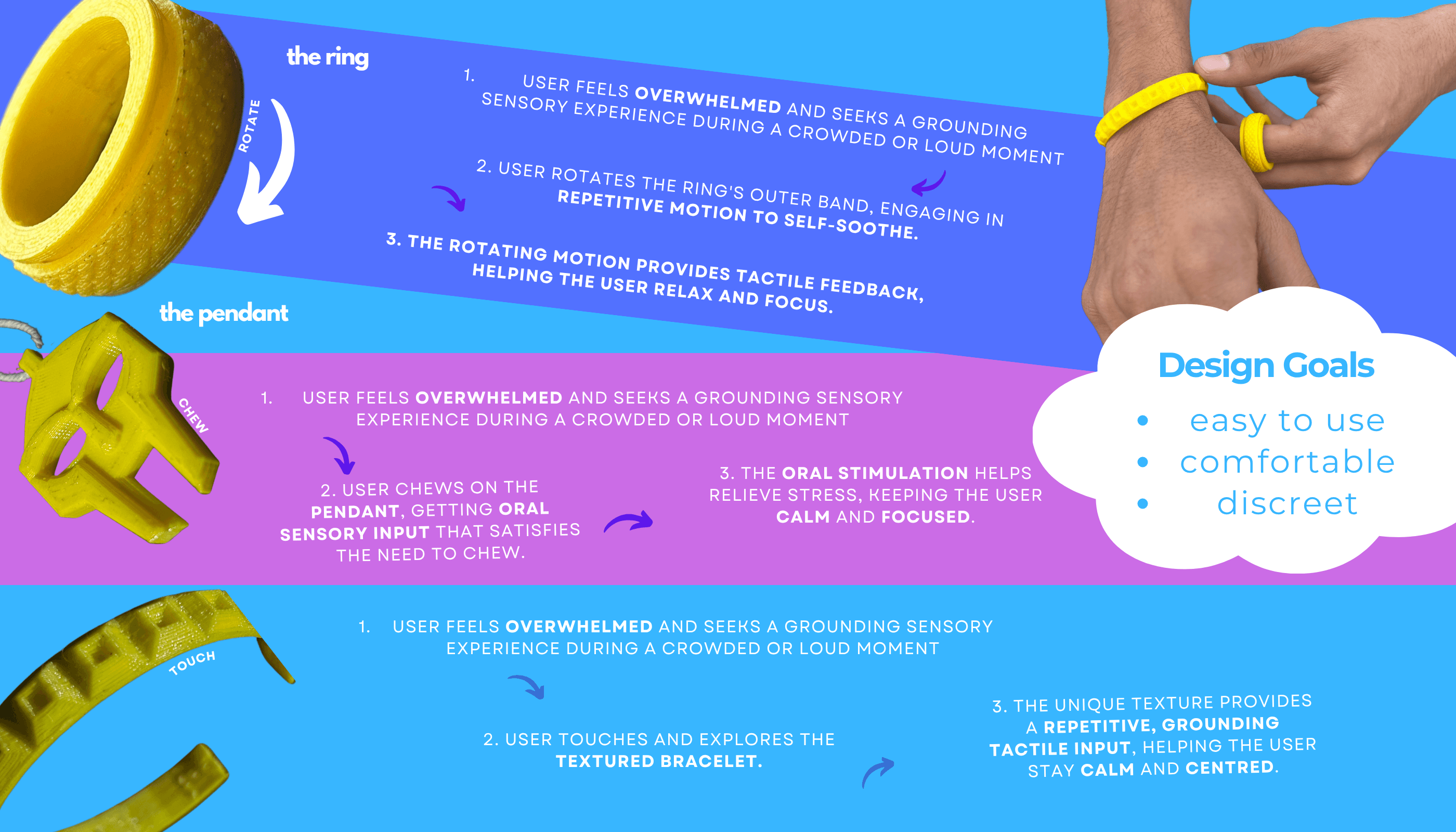
Bracelet, pendant, ring, each tuned for a different stim.
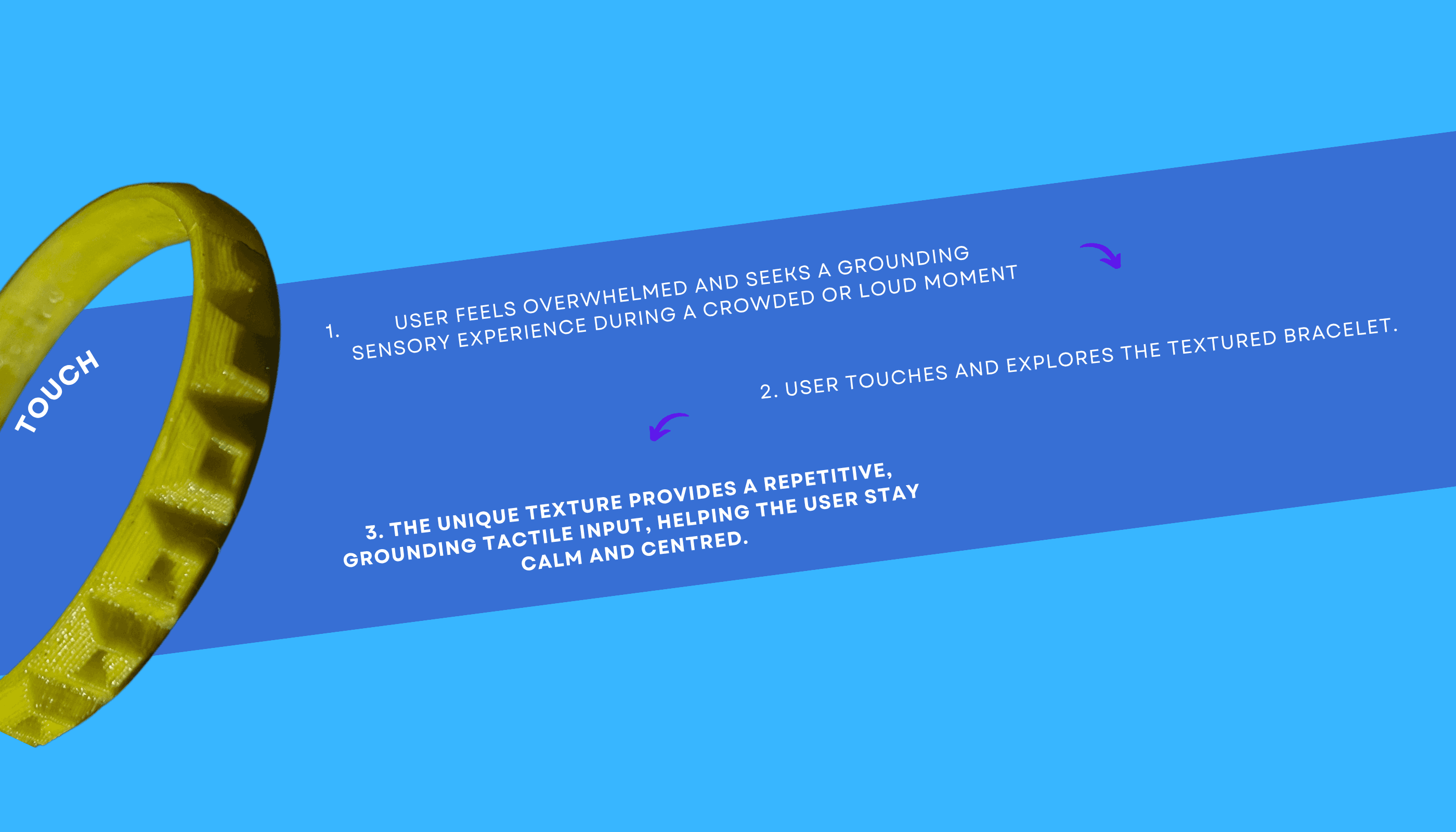
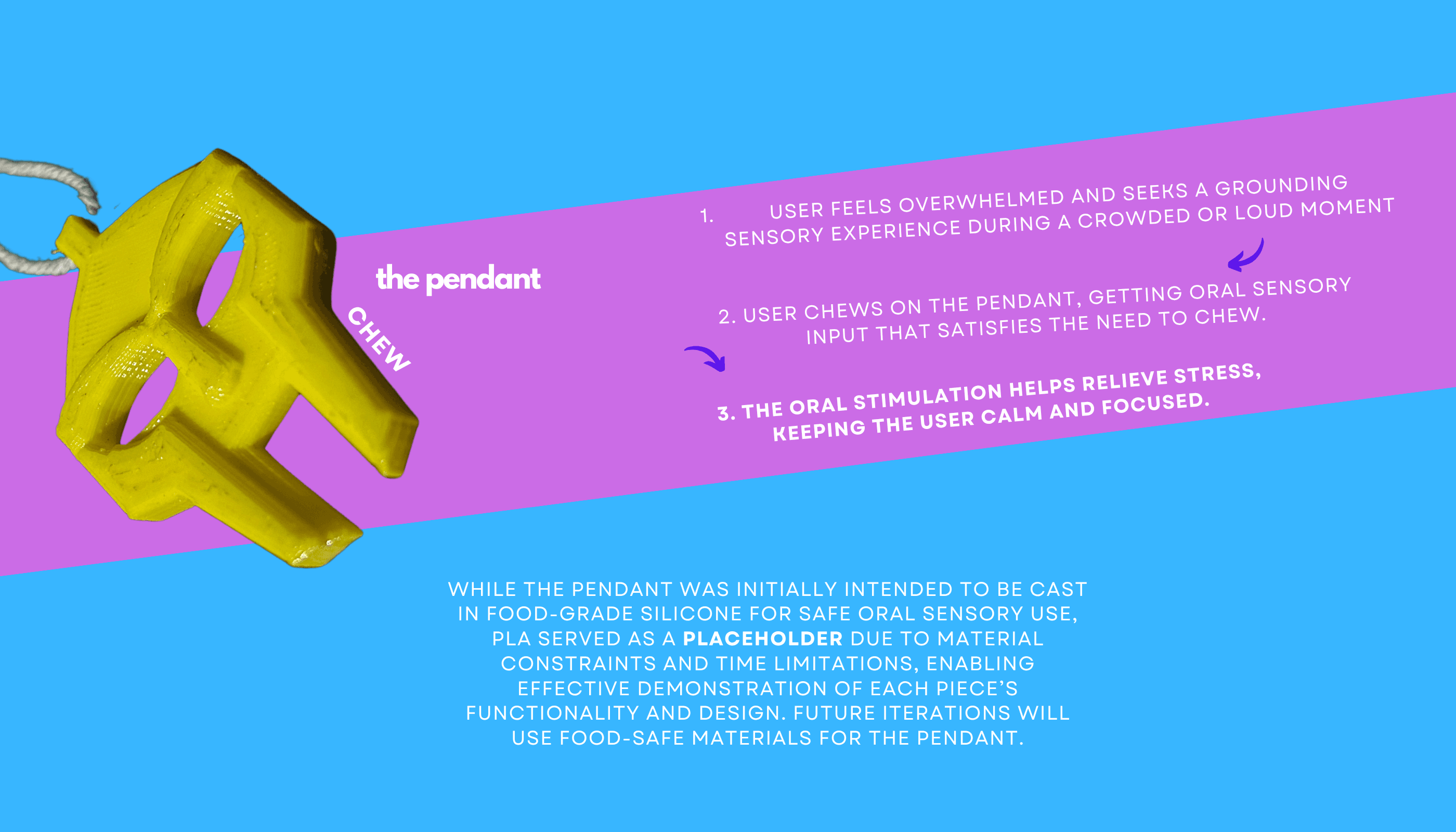
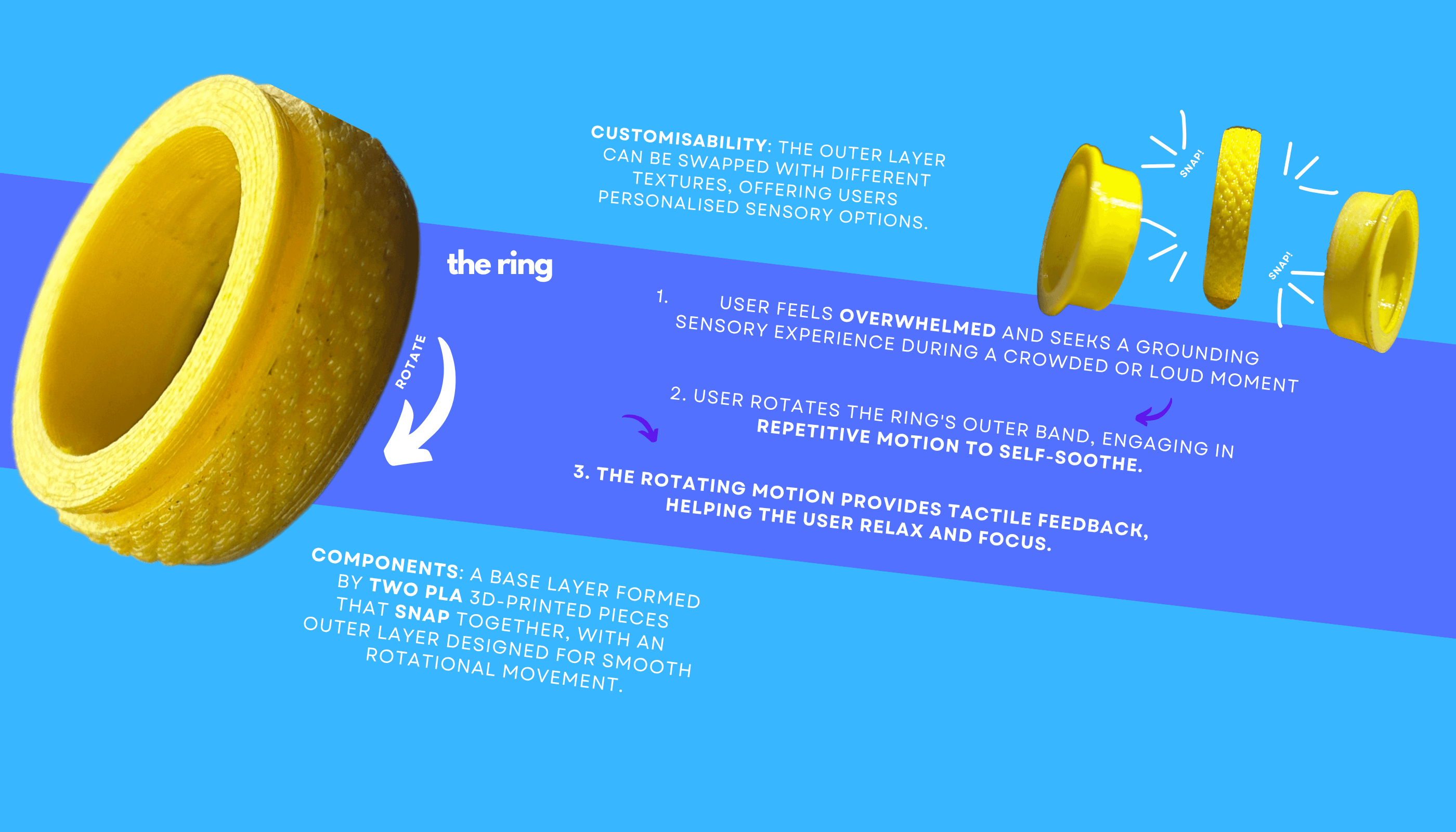
I split the system across three forms because no single object can support every stim. The bracelet is built for tactile rubbing, its surface alternates between smooth and ridged so the same motion produces different sensations. The pendant is sized and finished for safe oral stimming, biting, chewing, using flexible, food-safe TPU. The ring is the discreet fidget option for when a child is in a setting where wearing a pendant might draw attention. The pieces talk to each other visually; you'd recognise them as a set without them feeling like a uniform.
Iterate, print, hand it to a kid, listen.
The form work was iterative. Every prototype got 3D-modelled in Blender, printed in flexible filament, and tested for grip, mouth-feel, durability, and, crucially, whether a child wanted to put it on. I worked with parents and therapists for feedback on portability, safety, and attachment style. Many early forms got rejected because they were trying too hard to look like 'design objects'; the final pieces succeeded because they got out of their own way.
First-print prototypes of all three pieces, validated with users and therapists. Modular system designed to be wearable as a set or piece-by-piece.
Production-grade material exploration is the next step, silicone for the pendant, a metal core for the bracelet, to take this past 3D-printed prototypes into something a parent could actually buy.